
Key Takeaways
- SaucerSwap is currently the leading decentralized exchange on Hedera.
- If Hedera’s enterprise adoption strategy succeeds, the ecosystem could grow significantly by 2030.
- Large industry collaborations such as logistics and energy initiatives could act as lighthouse use cases for adoption.
- A larger Hedera ecosystem could lead to more tokens, more liquidity, and higher DeFi activity.
- As the primary DEX on Hedera, SaucerSwap could benefit directly from ecosystem growth.
- Under a mature ecosystem scenario, a $3–$5 SAUCE price range by 2030 could be plausible, though timelines in crypto are never guaranteed.
Introduction
What could SaucerSwap realistically be worth by 2030 if the Hedera ecosystem continues growing?
Price predictions in crypto are often filled with hype, unrealistic timelines, and numbers pulled out of thin air. Instead of doing that, it’s better to start with something simple: the underlying ecosystem.
SaucerSwap doesn’t exist in isolation. Its long-term value is tied directly to the success and growth of Hedera.
And right now, there are some interesting signals emerging.
This article reflects opinion and analysis only and is not financial advice.
The Hedera Factor
One of the biggest differences between Hedera and most blockchain networks is its enterprise-first strategy.
Instead of chasing speculative hype cycles, the network has focused heavily on onboarding large global enterprises and building real infrastructure.
Take FedEx, for example.
FedEx has discussed building a potential “lighthouse use case” on Hedera, and more interestingly, has said they are working with industry partners such as UPS and DHL.
If that effort turns into a real industry solution, it could represent something crypto rarely sees:
A large-scale enterprise deployment involving multiple global logistics companies.
That kind of development would bring massive transactional volume and credibility to the network.
And FedEx is only one example.
Enterprise Momentum Appears to Be Growing
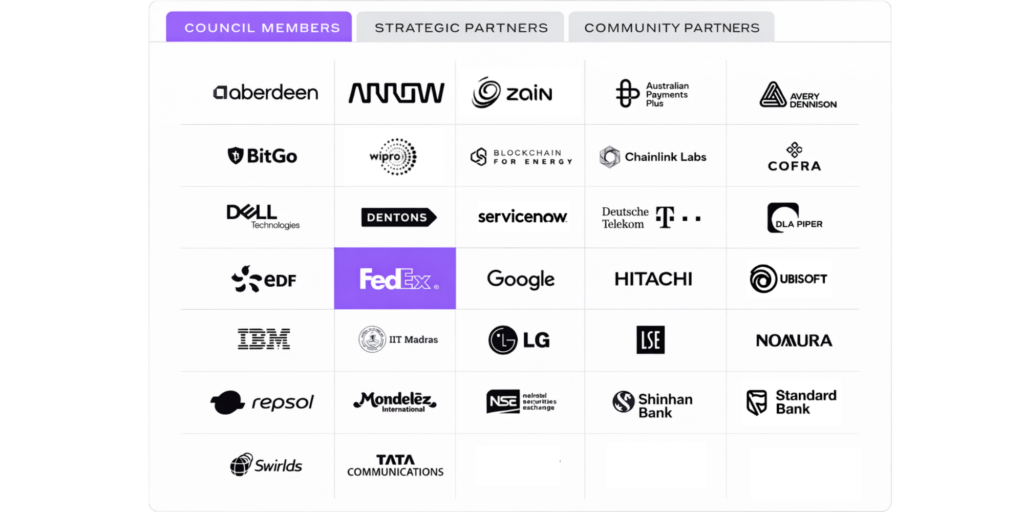
Another example is the Blockchain for Energy consortium, a collaboration between several major global energy companies exploring blockchain infrastructure for the energy industry.
Members include companies such as:
- Repsol
- Chevron
- ExxonMobil
- ConocoPhillips
The consortium focuses on improving data transparency, operational efficiency, and industry collaboration through shared digital infrastructure.
Like the potential logistics use case emerging around FedEx, initiatives like Blockchain for Energy could act as industry “lighthouse use cases.”
When multiple large companies in the same sector adopt a shared technology platform, it can accelerate adoption across the entire industry.
That type of momentum is exactly what many Hedera supporters believe could drive long-term growth for the network.
The Future Hedera Ecosystem
Looking forward, it’s possible to imagine a Hedera ecosystem that includes:
- Enterprise utility tokens
- Industry-specific digital assets
- Carbon and sustainability platforms like DOVU
- Financial infrastructure projects like BSL
- DeFi platforms such as SaucerSwap
If Hedera’s enterprise strategy works, the platform could eventually support hundreds or even thousands of tokens tied to real industries.
That kind of ecosystem would naturally create demand for liquidity, trading, and decentralized financial infrastructure.
Which brings us back to SaucerSwap.
Why SaucerSwap Matters
SaucerSwap is currently the leading decentralized exchange on Hedera.
If the ecosystem grows, the role of a primary DEX becomes extremely important.
DEX platforms provide:
- Liquidity for tokens
- Trading markets
- DeFi lending and derivatives
- Infrastructure for new tokens launching in the ecosystem
In other words, they become core financial infrastructure.
And historically, the biggest DEX platforms on major networks have achieved multi-billion-dollar valuations.
Examples include:
- Uniswap (Ethereum)
- PancakeSwap (BNB Chain)
- Raydium (Solana)
If Hedera grows significantly, it would not be surprising to see its primary DEX grow alongside it.
SaucerSwap’s Roadmap Is Expanding
Another factor worth considering is the scope of SaucerSwap’s roadmap.
The project is not positioning itself as just a simple token swap platform.
Planned developments include:
- SaucerSwap V3
- Perpetual futures trading
- HTS ↔ ERC-20 compatibility layers
- Hedera “ETF” style contracts
- Decentralized website mirrors
- Universal analytics dashboards
- Advanced trading tools
- Cross-chain liquidity infrastructure
- DAO-as-a-service frameworks
- Sub-DAO governance systems
- Institutional partnership programs
Some of these features move SaucerSwap beyond a typical DEX and closer to a professional DeFi trading platform.
That kind of infrastructure becomes increasingly valuable as an ecosystem grows.
The Memecoin Effect
Another interesting dynamic that could emerge over time is the memecoin cycle.
Historically, once a blockchain ecosystem becomes large enough and attracts enough liquidity, speculative markets begin to form.
We saw this with:
- Ethereum
- Solana
- BNB Chain
Once capital flows into an ecosystem and trading infrastructure matures, memecoins and experimental tokens often follow.
This isn’t just speculation, it’s a predictable pattern driven by liquidity, trading culture, and speculation cycles.
If Hedera eventually reaches a similar scale, the same phenomenon could occur.
And when it does, most of that trading activity typically happens on the ecosystem’s dominant DEX.
Again, that brings us back to SaucerSwap.
Why a $3–$5 SAUCE Price by 2030 Is Plausible
If Hedera continues expanding its enterprise footprint and building real industry adoption, the network could look dramatically different by the end of the decade.
Under that scenario, it’s reasonable to imagine:
- a larger token ecosystem
- increased DeFi activity
- deeper liquidity pools
- greater trading volume
If SaucerSwap remains the primary decentralized exchange on Hedera, the platform could capture a large portion of that activity.
And if that happens, a $3 to $5 price range for SAUCE by 2030 becomes plausible.
Not guaranteed.
Not immediate.
But plausible within a mature ecosystem.
The Real Key: Hedera’s Growth
Ultimately, SaucerSwap’s long-term potential is tied to one question:
Does Hedera succeed in onboarding real-world industries at scale?
If the answer is yes, then the infrastructure built on top of it – DEX platforms, liquidity providers, and financial tools – could become extremely valuable.
And if SaucerSwap remains at the center of that infrastructure, its native token could grow right alongside the network it serves.